From Prince to Enlightened One: The Life of Buddha

88themovie.com – The life of Siddhartha Gautama, commonly known as the Buddha, is a journey that has inspired millions across the globe. Born a prince in 6th century BCE in Lumbini, Nepal, his life took a dramatic turn from the opulence of royalty to the simplicity of a mendicant. This transformation was not just a physical journey but a profound spiritual odyssey that led to enlightenment.

Early Life in the Palace

Siddhartha was born into the Shakya clan, a royal family. His father, King Suddhodana, and mother, Queen Maya, were overjoyed at his birth, which was said to be prophesied. To shield him from the sufferings of the world, his father created a luxurious environment within the palace walls. Siddhartha was married to Yasodhara and had a son, Rahula. Despite the comforts, Siddhartha felt an inner restlessness.

The Great Renunciation

At the age of 29, Siddhartha’s curiosity about the world outside the palace walls led him to venture out. What he saw—sickness, old age, and death—deeply affected him. Encountering an ascetic, he saw a potential path to understanding the nature of suffering. That night, he left his family and royal life behind, embarking on a spiritual quest.

The Quest for Enlightenment

Siddhartha’s journey took him to various teachers who taught him meditation and austerities. Despite achieving deep states of meditation, he felt these practices did not lead to the ultimate understanding of life’s suffering. He then practiced extreme asceticism, nearly starving himself to death, only to realize this path was also not the way.

The Middle Path and Enlightenment

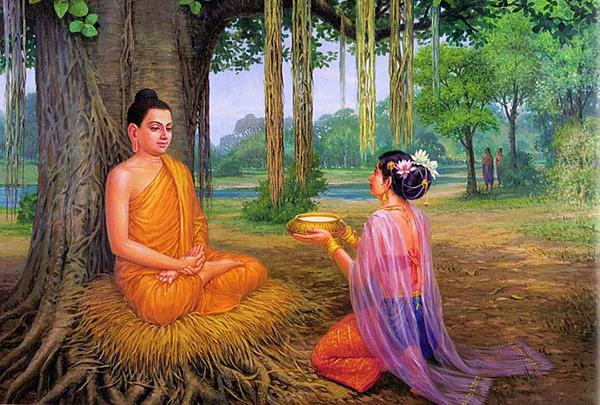
Rejecting both extremes of indulgence and self-mortification, Siddhartha chose the Middle Path. He accepted a meal from a village girl, Sujata, and regained his strength. He then sat under a Bodhi tree, vowing not to rise until he had attained enlightenment. After a tumultuous night battling Mara (the personification of temptation, desire, and death), Siddhartha achieved enlightenment and became the Buddha, “the awakened one.”

Teaching and Spreading the Dharma

After enlightenment, Buddha spent the rest of his life teaching the path to enlightenment. He shared the Four Noble Truths and the Eightfold Path, which form the core of Buddhist teachings. His first sermon was in Sarnath, near Varanasi, where he taught the Middle Path to his former companions.

The Mahaparinirvana

After 45 years of teaching, Buddha passed away at the age of 80 in Kushinagar. His death, known as Mahaparinirvana, is considered the final release from the cycle of rebirth and suffering. His teachings, however, continue to influence countless lives, promoting peace, compassion, and wisdom.

Legacy

Buddha’s life story is a testament to the human potential for transformation and enlightenment. From a sheltered prince to a world-renowned spiritual leader, his journey inspires individuals to seek their own paths to understanding and peace. The Buddha’s teachings have evolved into one of the world’s major religions, Buddhism, which continues to spread its message of compassion, mindfulness, and the end of suffering.

Conclusion

The life of Buddha is a profound narrative of human potential and spiritual awakening. It teaches us that enlightenment is not just for a select few but a path that anyone can embark upon. Through his life, Buddha showed that suffering can be overcome, and inner peace is attainable for all who seek it. His legacy continues to inspire and guide countless individuals on their own journeys toward enlightenment.


Urban and Rural Life in America: The Skyscraper and the Small Town

88themovie.com – In the vast tapestry of American life, two distinct yet interconnected worlds stand in stark contrast: the towering skyscrapers of urban centers and the quaint, close-knit communities of small towns. These two realms, though miles apart in physical appearance and lifestyle, are integral to the fabric of the United States, each contributing uniquely to the nation’s identity, culture, and economy. This article explores the juxtaposition of urban and rural life in America, examining the characteristics, challenges, and charm of each.

The Allure of the Skyscraper: Life in Urban America

Urban America is epitomized by its skyscrapers, symbols of progress, ambition, and innovation. Cities like New York, Chicago, and San Francisco are bustling metropolises that never sleep, offering a plethora of opportunities in employment, education, and entertainment. The diversity of urban centers is unparalleled, with people from all walks of life coming together to form a mosaic of cultures, languages, and traditions.

The economic engine of the United States, urban areas are home to major corporations, financial institutions, and tech giants. They are hubs of creativity and entrepreneurship, where ideas are born and businesses are launched. The arts and culture scene is vibrant, with world-class museums, theaters, and galleries. Urban living, however, comes with its challenges. High costs of living, congestion, and the sometimes impersonal nature of city life can be daunting. Yet, for many, the opportunities and experiences offered by urban America outweigh the drawbacks.

The Charm of the Small Town: Rural America’s Appeal

In stark contrast to the hustle and bustle of city life, small towns across America offer a sense of community, tradition, and tranquility. These rural areas, often overlooked in the national narrative, are the heart and soul of the country, preserving a way of life that is rapidly disappearing. Small towns are characterized by their close-knit communities, where everyone knows your name, and neighbors are quick to lend a helping hand.

The pace of life in rural America is slower, allowing for a deeper connection with nature and a simpler way of living. Agriculture remains a significant part of the economy in many small towns, with family-owned farms and ranches contributing to the nation’s food supply. Despite the charm and strong sense of community, rural America faces its own set of challenges, including economic stagnation, declining populations, and limited access to services such as healthcare and education.

Bridging the Divide: The Urban-Rural Connection

Despite their differences, urban and rural America are more interconnected than they might seem. Many city dwellers have roots in small towns, while rural communities often rely on urban markets for their goods and services. The divide between the two is not just geographical but also ideological, with differing perspectives on issues such as development, environmental conservation, and government policy.

Efforts to bridge this divide are crucial for the well-being of the nation. Initiatives that support rural development, improve infrastructure, and enhance connectivity can help revitalize small towns. Similarly, urban areas can learn from the community-oriented approach of small towns, fostering a sense of belonging and reducing social isolation.

Conclusion

The skyscraper and the small town represent two faces of America, each with its own allure and set of challenges. Urban and rural life in the United States are not just different ways of living but also reflections of the nation’s diversity and complexity. By recognizing and celebrating these differences, while also working to bridge the divide, America can harness the strengths of both its urban and rural communities, ensuring a vibrant and inclusive future for all.

Transforming Your Life: From Sickness to Health

88themovie.com – The journey from sickness to health is not merely a physical transition but a profound transformation that encompasses the mind, body, and spirit. It is a path paved with challenges, self-discovery, and ultimately, empowerment. This transformation is not just about the absence of disease but about achieving a state of complete physical, mental, and social well-being. Here, we explore the steps and mindset shifts necessary to embark on this transformative journey.

1. Acknowledging the Need for Change

The first step towards transformation is acknowledging that change is needed. This realization often comes after a health scare, a diagnosis, or simply a moment of clarity where one recognizes that their current lifestyle is not sustainable. It’s about accepting the present state and being open to the possibility of a healthier future.

2. Setting Realistic Goals

Once the decision to change is made, setting realistic and achievable goals is crucial. These goals should be specific, measurable, attainable, relevant, and time-bound (SMART). Whether it’s losing weight, quitting smoking, or starting an exercise routine, setting clear goals provides a roadmap for the journey ahead.

3. Embracing a Holistic Approach

True health transformation requires a holistic approach that addresses all aspects of well-being. This includes:

  • Nutrition: Adopting a balanced diet rich in fruits, vegetables, whole grains, and lean proteins.
  • Physical Activity: Incorporating regular exercise into your routine, which can range from walking to yoga, strength training, or sports.
  • Mental Health: Practicing mindfulness, meditation, or therapy to manage stress and improve mental well-being.
  • Social Connections: Building and maintaining supportive relationships that contribute to emotional health.

4. Making Lifestyle Changes

Lifestyle changes are at the heart of the transformation from sickness to health. This might involve quitting smoking, reducing alcohol consumption, getting enough sleep, and managing stress effectively. These changes are not just about eliminating negative habits but about adopting positive ones that support overall health.

5. Seeking Support

No one should embark on this journey alone. Seeking support from healthcare professionals, friends, family, or support groups can provide the guidance, encouragement, and accountability needed to stay on track.

6. Celebrating Progress

Transformation is a process, and it’s important to celebrate the small victories along the way. Whether it’s reaching a new fitness milestone, sticking to a healthy eating plan, or managing stress more effectively, acknowledging progress boosts motivation and reinforces the commitment to change.

7. Embracing Lifelong Learning

Finally, the journey from sickness to health is a lifelong learning process. It’s about staying informed, being open to new approaches, and continuously seeking ways to improve physical, mental, and emotional well-being.

Conclusion

The transformation from sickness to health is a profound journey that requires commitment, resilience, and a willingness to embrace change. By setting realistic goals, adopting a holistic approach, making lifestyle changes, seeking support, celebrating progress, and embracing lifelong learning, anyone can achieve a state of complete well-being. Remember, the journey is as important as the destination, and every step taken towards health is a victory in itself.